
Paid Media Management in St. Louis That Drives Real Growth
From Google Ads to Paid Social, Collina Digital helps local and national brands find the right customers, convert demand, and scale performance with disciplined testing and clear reporting. We’re a proud Google Partner.

Built for businesses that need results—not just impressions.
Whether you’re a growing local business looking for a predictable lead engine, or a larger brand needing scalable campaigns across multiple locations, Collina’s paid media team builds strategies that connect creative, targeting, and conversion tracking to measurable outcomes.
-
You need more qualified leads (forms, calls, bookings) or increased e-commerce sales (getting your products purchased online).
-
You want to improve ROAS/CAC and maximize the efficiency of every dollar spent.
-
You’re expanding into new locations or launching new product lines in competitive markets.
-
You need multi-location campaigns with local relevance
-
You want paid media aligned with a clear funnel (awareness → conversion)
-
You want a partner who can run digital and support traditional channels when it makes sense
Paid Media Services
A strong brand matters—but it only performs when the right audience sees it. We use data to find your ideal customer across the web, then optimize toward the actions that matter.
- Google Ads (The Full Ecosystem) We don’t just “run ads”; we manage the full suite of Google’s advertising power to meet your specific goals:
- Search: Capture high-intent demand and “near me” searches.
- Performance Max (PMax): An AI-driven, all-in-one campaign type we use to drive both qualified leads and e-commerce product purchases across all Google channels.
- YouTube: Standalone video campaigns designed for brand awareness and demand generation.
- Shopping: Visual product listings designed for direct e-commerce conversions.
- Display: Targeted visual ads across the web to keep your brand top-of-mind.
- Local Services Ads: High-trust leads for service-based businesses (HVAC, Legal, etc.).
- Demand Generation: Social-style image and video ads that spark interest before a user even searches for you.
- Paid Social (Meta: Facebook + Instagram)
Build audiences and convert them with location-aware creative, offers, and retargeting—optimized to KPIs that support growth, not vanity metrics. - LinkedIn Advertising (B2B)
Reach decision-makers with targeting by job title, industry, company size, and intent—paired with conversion-focused landing pages. - TikTok + Pinterest Advertising
Expand reach and demand generation with platform-native creative and structured testing. - Campaign Strategy, Management + Reporting
We launch, monitor, and optimize continuously—then report clearly on performance, learnings, and next actions. - Traditional Media Support
When the market calls for it, we can integrate direct mail, publication, billboards, radio, and TV into a cohesive plan.
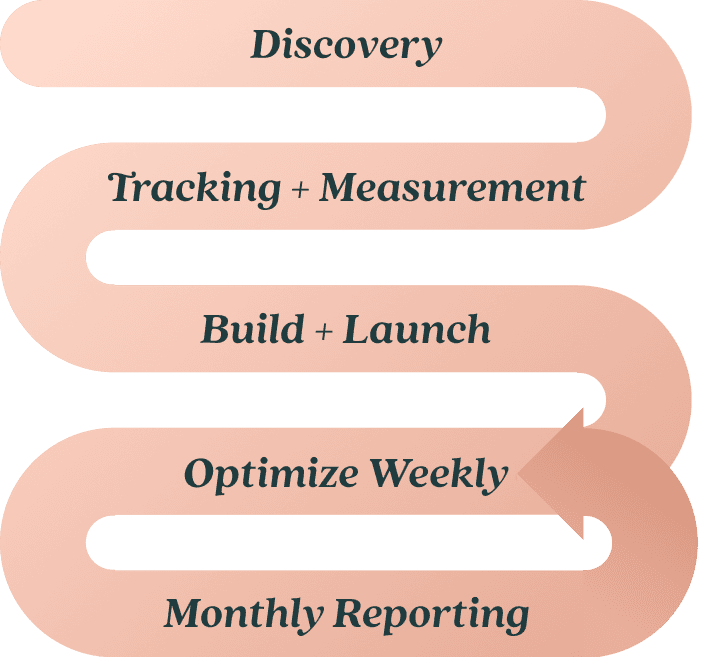
How our paid media process works
- Discovery + Goals Business model, targets, margins, geo priorities, seasonality, and what success means.
- Tracking + Measurement: Conversion setup (forms, calls, bookings), platform signals, and a KPI plan.
- Build + Launch: Campaign structure, creative variations, audience strategy, and landing page alignment.
- Optimize Weekly: Search term refinement, audience tuning, budget reallocation, and A/B testing. (Your Save A Lot case study highlights ongoing A/B testing of headlines/descriptions/extensions.)
- Reporting Monthly: What happened, why it happened, what we learned, and what we’re doing next.
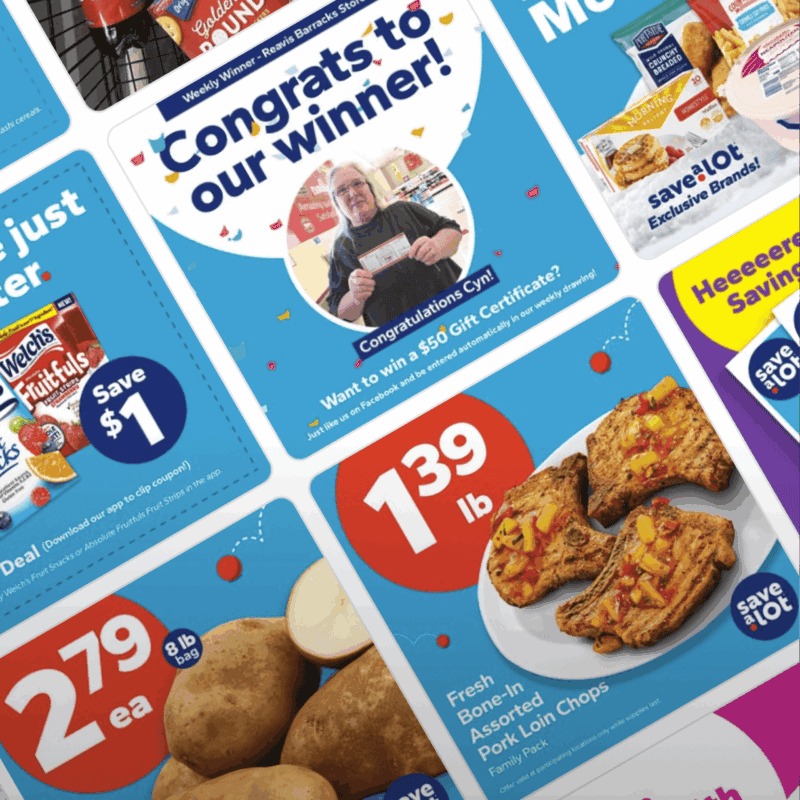

St. Louis case study: Save A Lot — Local store activation & changing brand perception
In a competitive, price-sensitive grocery market, Save A Lot needed stronger local visibility and more shoppers in-store—fast. In just 90 days, Collina executed a full-funnel approach across awareness, engagement, and conversion. By pairing localized Meta campaigns with high-intent local Google Ads, we triggered immediate actions like calls, directions, and visits. The results of this three-month acceleration included:
- +2,683 new followers (65% growth)
- 90,000 unique users reached on Meta
- +170% engagement lift
- 500 directions clicks + ~400 visits attributed via Google Business Profile activity
- 23% improvement in cost per engagement
Frequently Asked Questions
What is the difference between SEO and PPC?
SEO (search engine optimization) focuses on improving your website so it ranks organically in search results over time. PPC (pay-per-click) is paid advertising where you show up instantly and only pay when someone clicks your ad.
The biggest difference comes down to speed and control. SEO builds long-term visibility, while PPC delivers immediate traffic and allows you to target specific audiences, locations, and keywords right away. Most businesses see the best results when both strategies work together.
What does PPC mean?
PPC stands for pay-per-click, a type of digital advertising where you only pay when someone clicks on your ad. It’s commonly used on platforms like Google Ads and social media.
Instead of waiting for organic traffic, PPC helps you get in front of potential customers immediately when they’re searching or browsing online.
How does Google decide which ads go first?
Google Ads uses a system called Ad Rank to determine which ads appear and in what order. This is based on a combination of your bid (how much you’re willing to pay), your ad quality, and how likely people are to click through to your website.
In simple terms, the highest spender doesn’t always win. Google prioritizes ads that are relevant, helpful, and likely to perform well, which is why strategy and optimization matter just as much as budget.
How much does a Google ad cost?
There’s no flat rate for ads on Google Ads. Costs vary based on your industry, competition, and the keywords you’re targeting.
Some clicks can cost just a few dollars, while competitive industries may see much higher costs. Most businesses set a monthly budget and adjust based on performance. The key is not just how much you spend, but how efficiently that budget turns into leads or sales.
If you’re not sure how much to invest in Google Ads, we offer a Media Spend Discovery & Audit to help determine the right budget for your goals. If you decide to move forward with us, the cost of the audit can be credited toward your campaign.
Our plans start at $1,000 per month, which includes both ad spend and media management.
What are keywords and how many do I need?
Keywords are the words or phrases people type into search engines when looking for a product or service. In PPC, they determine when your ads appear.
There’s no perfect number, but most campaigns start with a focused list of high-intent keywords rather than trying to target everything. A smaller, well-optimized keyword set often performs better than a large, unfocused one.
How long does it take for Google Ads to start working?
You can start seeing traffic from Google Ads almost immediately after your campaign launches if it is optimized correctly. That said, significant results typically take anywhere from a few weeks up to a few months as data comes in and campaigns are further optimized. Performance improves over time as targeting, messaging, and bidding strategies are refined.
While Google recommends 45 days to capture clean data, we suggest a minimum of 3 months to collect data and start optimizing the ads.
Why am I getting clicks but no sales?
Getting clicks without conversions usually points to a disconnect somewhere in your funnel. Common issues include targeting the wrong audience, weak landing pages, unclear messaging, or an offer that doesn’t match user intent.
Paid ads can drive traffic, but turning that traffic into sales depends on the full experience after the click.
Do I have to be on every platform?
<a href=”https://calendly.com/laurie-collinadigital/free-15-minute-discover-call” style=”display:inline-block;background-color:#e6aa94;color:#1a3d3f;font-family:’quincy-cf’,serif;font-size:24px;font-weight:900;font-style:italic;padding:16px 30px;border-radius:10px;letter-spacing:0.36px;line-height:26.4px;text-decoration:none;”>15 Minute Discovery Call</a>No, and in most cases, you shouldn’t be. The best results come from focusing on the platforms where your audience is most active and where your goals align. For example, search ads capture intent, while social ads generally help build awareness. A targeted approach almost always outperforms trying to be everywhere at once.
How do you measure whether ads are working?
Success in paid media is measured by how well your campaigns achieve your business goals. This often includes metrics like conversions, cost per lead, return on ad spend (ROAS), and overall revenue generated.
Clicks and impressions are helpful, but the real focus is on outcomes that impact your bottom line.
Why are LinkedIn ads so expensive?
Ads on LinkedIn tend to cost more because of the platform’s highly specific targeting. You can reach users based on job title, industry, company size, and more.
While the cost per click is higher, the quality of leads can also be significantly stronger, especially for B2B companies.
What is the difference between Facebook Ads and Google Ads?
Google Ads targets people based on what they are actively searching for, which means high intent.
Facebook Ads targets users based on interests, behaviors, and demographics, even if they aren’t actively searching.
In short, Google captures demand, while Facebook helps create it. Many businesses benefit from using both together.
How do I target customers in my area?
Platforms like Google Ads, Facebook Ads, LinkedIn Ads, Connected TV, Programmatic Display, and more allow you to target users by location, including cities, zip codes, or a radius around your business.
This makes it possible to focus your budget on the people most likely to become local customers.
What is Connected TV?
Connected TV (CTV) refers to advertising on televisions that stream content over the internet, rather than through traditional cable. This includes platforms like Hulu and YouTube, where ads can be targeted to specific audiences.
What is Performance Max?
Performance Max is a campaign type within Google Ads that uses automation and machine learning to show your ads across multiple Google channels, including Search, Shopping, Maps, Discover, Display, YouTube, and Gmail.
It’s designed to maximize results by automatically optimizing where and how your ads appear based on your goals.
"*" indicates required fields